

Today’s buildings are designed for life spans of 50 to 80 years — and steel conduit lasts at least that long, making it the essential component of modern electrical systems. Steel conduit resists all common forms of wear, ensuring long-lasting…
When steel RSC, IMC or EMT raceways are used to penetrate a fire-resistance-rated assembly of concrete or masonry, the International Building Code (IBC) allows the annular space to be filled (sealed) with cement, mortar, or grout instead of having to…
Despite the similarity to pipes used in plumbing, purpose-designed electrical fittings are used to connect conduit. Box connectors join conduit to a junction box or other electrical box. A typical box connector is inserted into a knockout in a junction box, with the threaded end then…
Too many wires connected to one single circuit could make the circuit breaker overloaded and it will be a big risk of overheating. Overheating causes the electrical raceway to short circuit that will result in fires. To reduce the risk…

There are quite a few different types of electrical conduit, and also different methods of bending it. It’s important that you choose the best method to bend the conduit you are using for your electrical wiring project. Bending electrical conduit…
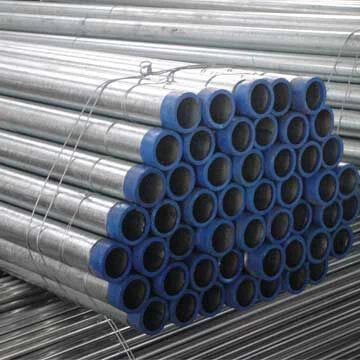
Most Universal As buildings get more complex, the National Electric Code® (NFPA 70) places more restrictions on more wiring methods — but steel conduit is still allowed everywhere. That’s because it provides the best protection in every location. Building owners across…
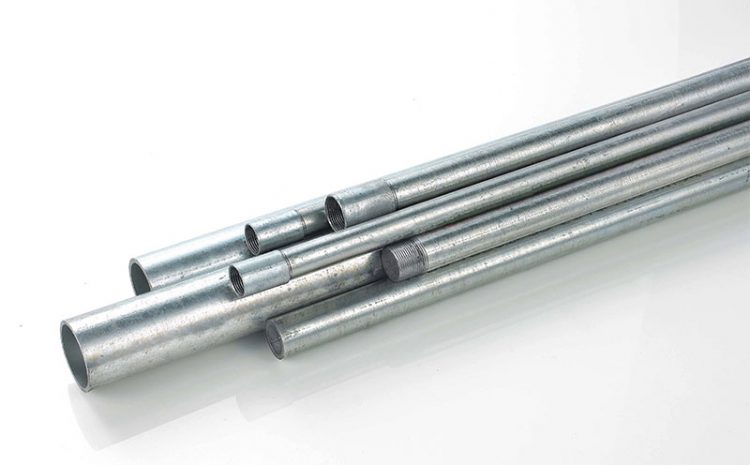
Steel Rigid Steel Conduit (RSC) has the thickest-wall of the steel raceways. It is available with either a straight-tapped or integral coupling. Galvanized Steel RMC may have a primary coating of zinc on the exterior and interior of the conduit;…
Intermediate Metal Conduit (IMC) was developed in the 1970s as a thin-wall alternative to rigid steel conduit (RSC) that weighs about one-third less. IMC ships with either a straight-tapped or integral coupling. It features a galvanized OD and ID. IMC…

The main EMT fittings are EMT connectors and EMT couplings. What’s an EMT Connector? An EMT connector always comes with a lock nut at its threaded end. EMT connectors are designed to slide over an Electrical Metallic Tubing at one…